Review: St Patrick Icon Clipart for Embroidery
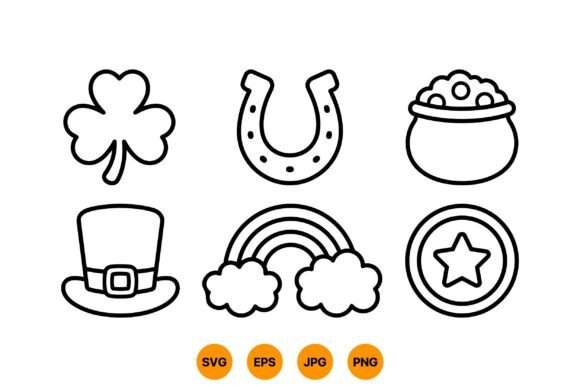
As a designer who spends half my life staring at digitized paths and the other half pulling bobbins out of tangled messes, I have learned to be skeptical of "simple" graphics. We often assume that minimal line art translates easily to thread, but the reality is far more nuanced. When I first opened the St Patrick Icon Clipart package, my initial reaction was one of cautious optimism. The preview showed playful, simple line art icons depicting St. Patrick’s Day symbols, which is exactly the kind of aesthetic that trends well in spring collections. However, seeing a graphic on a screen and seeing it stitched onto a textured cotton tote are two very different experiences.
First Impressions and Visual Personality
The mood of this collection is undeniably cheerful and approachable. These are not intricate, heritage-style illustrations meant for heirloom linens; they are modern, bold, and designed for quick recognition. For an embroidery project, this visual personality is a double-edged sword. On one hand, the simplicity means fewer stitch jumps and potentially faster run times. On the other hand, "simple" can sometimes mean "fragile" when translated into thread. The lines need enough weight to hold their shape without looking like sparse scribbles.
Looking at the provided files—SVG, PNG, JPG, and EPS—I immediately noted that these are primarily vector-based graphics intended for cutting and printing. For us in the embroidery world, this means we are likely looking at using these as reference images for manual digitizing or converting them via auto-digitizing software with heavy manual cleanup. The clean lines suggest that a combination of running stitch for outlines and perhaps light satin stitch borders would work best. Trying to force a fill stitch into these thin icon shapes would likely result in a puckered, dense mess that ruins the fabric's drape.
Real-World Application: The Tote Bag Test
To truly evaluate the St Patrick Icon Clipart, I imagined a specific real-life scenario: a custom order for a local boutique needing fifty reusable tote bags for a St. Patrick’s Day sale. The client wanted something playful but professional. This is where the rubber meets the road. If I were to place one of these shamrock or pot-of-gold icons on a canvas tote, the scale becomes critical.
Because the artwork relies on line weight, stitching it too small on a large bag would make the design disappear from a distance. Conversely, blowing it up too large might expose any inconsistencies in the line curvature. I found that these icons perform best when used as part of a larger composition or repeated in a pattern. For a single focal point on a tote bag design, I would recommend pairing the icon with bold typography to give it visual anchor. The playful nature of the graphics fits perfectly with the casual utility of a tote, appealing to customers who want festive gear that doesn't feel childish.
Apparel and Fabric Considerations
Moving from canvas to clothing, the behavior of these graphics changes. For sweatshirt embroidery, the thicker fabric provides a stable base, allowing the lines to sit flat. However, if you are attempting baby embroidery on a soft, stretchy onesie, caution is required. Simple lines can distort easily on knit fabrics if the stabilizer isn't robust enough. I would advise using a cut-away stabilizer for any garment that will be washed frequently, ensuring the finished product maintains its shape after the first laundry cycle.
When considering custom apparel like caps or curved surfaces, the simplicity of the St Patrick Icon Clipart is actually an advantage. Complex designs struggle with the curvature of a hat brim, but these isolated symbols can be placed strategically on the side panel or front center without significant distortion. Just remember that on dark fabrics, your thread colors need to pop. A bright green running stitch on a navy cap looks crisp, but a subtle shade difference will render the design invisible.
Navigating Technical Challenges
While the aesthetics are charming, there are technical hurdles to address before committing to a production run. Since the download includes SVG and EPS files rather than native embroidery formats like PES or DST, you must account for the digitizing process. Auto-digitizing these simple lines often results in excessive underlay or jagged corners. A skilled digitizer will need to manually adjust the stitch density to ensure the lines are smooth but not so dense that they perforate the fabric.
One area where these icons require careful handling is in small hoop sizes. If you are trying to fit multiple icons into a 4x4 hoop for an embroidered patch, the details might merge. It is essential to test the design on scrap fabric first. Check how the threads lay against each other. If the lines are too close, they may pull the fabric together, creating unwanted tension rings. Additionally, for products that need frequent washing, such as kitchen towels or aprons, ensure that the start and end points of the stitches are securely locked to prevent unraveling.
Commercial Value and Brand Consistency
For Etsy sellers and small shop owners, the appeal of St Patrick Icon Clipart lies in its versatility. These graphics can serve as the backbone for a cohesive spring collection. Whether you are creating holiday embroidery for home decor or personalized gifts, the consistent style helps build brand recognition. Customers trust a shop that presents a unified visual language. Using these icons across various design assets, from printable mockups to actual stitched goods, creates a professional appearance that justifies higher price points.
However, commercial use requires diligence. Before selling any handmade product featuring these designs, you must confirm the licensing terms. While the description mentions usage for party invitations and craft cut files, embroidery rights can sometimes be distinct. Always verify whether the license covers physical finished goods for resale. Assuming permission without checking can lead to serious legal issues for your craft business.
Final Verdict for Designers
In conclusion, the St Patrick Icon Clipart is a solid resource for designers who understand the translation from screen to stitch. It is not a plug-and-play solution for beginners who expect perfect results without adjustment. It requires thoughtful digitizing, appropriate fabric selection, and precise hoop placement. But for those willing to put in the work, these playful icons offer a fresh take on holiday motifs. They avoid the cliché overload often seen in seasonal graphics, providing a clean, modern alternative for commercial embroidery projects.
My advice is to start small. Stitch one icon on a scrap piece of the exact fabric you plan to use. Evaluate the thread tension, the clarity of the lines, and the overall balance. Once you have mastered the behavior of these lines, you can confidently expand into full collections of personalized gifts and boutique merchandise. The potential is there, but it demands the respect and attention to detail that only an experienced maker can provide.