Reviewing the Autism Mama Awareness Design for Embroidery
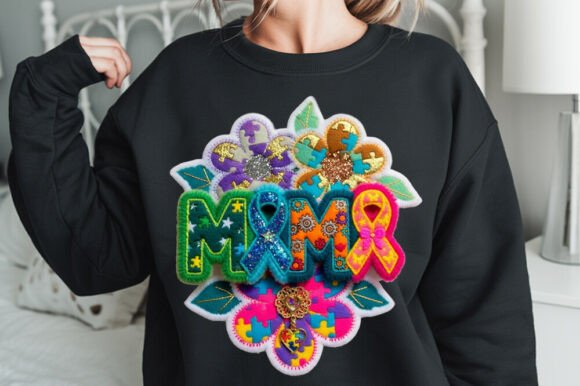
As a designer who spends half my life staring at stitch simulations and the other half wrestling with hoop tension, I approach every new graphic with a healthy dose of skepticism. We have all been there: you download a cute Freebies item, excited to slap it on a tote bag, only to realize the lines are too thin for satin stitching or the details vanish into the fabric texture. Today, I am taking a close look at the Autism Mama, Autism Awareness Day Shirt graphic. This is not just about whether it looks pretty on a screen; it is about whether it holds up under the needle.
The first thing that strikes me about this design is its emotional resonance. The "Autism Mama" theme is powerful, carrying a weight of pride, advocacy, and love. Visually, the layout tends to be bold and centered, which is exactly what you want for awareness apparel. When I opened the file—a print-ready PNG at 4500×5400 pixels with 300 DPI—I immediately started mentally converting those pixels into threads. The high resolution is a good start, ensuring that if you are using this for heat transfer or as a reference for digitizing, you have clean edges to work with. However, for us embroidery professionals, the journey from PNG to finished product requires some critical thinking.
From Screen to Stitch: Real-World Application
Let’s talk about a real scenario. Imagine a client comes to your small shop requesting a custom sweatshirt for Autism Awareness Month. They want something that says "Autism Mama" but feels professional, not like a last-minute craft project. This is where the Autism Mama, Autism Awareness Day Shirt graphic shines as a conceptual base. Because the design is likely text-heavy with potential symbolic elements like puzzle pieces or infinity loops, it translates well to custom apparel.
If you are digitizing this yourself, the bold nature of the text allows for effective use of satin stitch borders or even full fill stitch coverage, depending on the font weight. For a sweatshirt, which has a thicker, fleecy texture, you need a design with substance. Thin, wispy lines get lost in the pile of a hoodie. This graphic’s sturdy visual personality suggests it would hold up well on heavier fabrics like cotton twill, denim, or fleece. It creates a sense of solidity and permanence, which aligns perfectly with the message of enduring support and love.
However, we must address the elephant in the room: this is provided as a PNG Graphics file, not a native machine embroidery design file like PES or DST. This distinction is crucial. You cannot simply load a PNG into your embroidery machine. You have two paths here. First, you can use this high-quality PNG for sublimation printing or heat transfer vinyl, which works beautifully on polyester blends. Second, and more commonly for embroiderers, you use this image as a reference to digitize your own embroidery file. Having a crisp, 300 DPI reference makes the digitizing process significantly smoother, allowing you to trace accurate paths for your running stitch outlines and color blocks.
Navigating Fabric and Hoop Constraints
Where should you use this design carefully? Any time you are dealing with limited space or tricky textiles. If you are planning to put this on a cap or a curved surface, remember that large, blocky designs can cause puckering if the stitch density is too high. You will need to pull back on the density settings in your digitizing software and rely heavily on a cut-away stabilizer to maintain shape.
For baby embroidery projects, such as a onesie or a soft blanket, caution is key. Babies have sensitive skin, and dense stitching can feel scratchy. If you adapt this design for a little one, consider using softer thread colors and perhaps incorporating an applique design technique. By using fabric patches for the larger elements of the "Autism Mama" text or symbols, you reduce the amount of thread on the skin, making the personalized gift much more comfortable to wear. Additionally, avoid placing heavy stitch areas directly over seams on tote bag design projects, as the needle may break or skip when hitting thick layers.
Dark fabrics present another challenge. If you are stitching this on a navy or black shirt, you must ensure your thread colors have enough contrast. The autism awareness palette often includes reds, blues, and golds. These pop nicely against dark backgrounds, but you might need an underlay stitch to prevent the dark fabric from showing through the lighter threads. Always test your finished product on a scrap piece of the same fabric before committing to the final garment.
Boosting Brand Value and Customer Trust
For Etsy seller accounts and craft business owners, the quality of your design directly impacts perceived value. A crisp, well-executed embroidery job tells the customer that you care about details. Using a recognizable and meaningful theme like Autism Awareness helps build community connection. When customers see a well-stitched "Autism Mama" design, they are not just buying a shirt; they are buying into a statement of identity. This emotional connection drives engagement and shares, which is invaluable for small shop product visibility.
Furthermore, versatility is a selling point. This design can be scaled down for a pocket logo on a apron or scaled up for the back of a pillow cover. It fits seamlessly into holiday embroidery collections for April’s Awareness Month or can be part of year-round design assets for inclusive branding. By offering this as a high-quality option, you position your brand as thoughtful and socially aware.
Practical Notes for the Designer
Before you start stitching, here is my checklist for working with this type of graphic:
- Digitize with Care: Since you are starting with a PNG, take your time to trace the vectors. Ensure that curves are smooth to avoid jagged stitches.
- Check Licensing: The product description mentions it is a freebie, but always confirm if commercial use is allowed for the digital embroidery file you create from it. Some free graphics are for personal use only.
- Test Stabilizers: Use a tear-away stabilizer for woven fabrics like cotton t-shirts, but switch to cut-away for knits like sweatshirts to prevent distortion after washing.
- Mockup Review: Create a black and white mockup of your digitized version. If the design loses its clarity in grayscale, your contrast or line weight needs adjustment.
- Hoop Size: Confirm your hoop size can accommodate the full width of the text. Cramping a design into a small hoop can lead to registration errors.
In conclusion, the Autism Mama, Autism Awareness Day Shirt graphic is a solid foundation for meaningful embroidery projects. It requires the skilled hand of a digitizer to transform it from a static image into a dynamic embroidery project, but the potential for creating impactful handmade product items is high. Whether you are making a personalized gift for a friend or stocking your commercial embroidery catalog, this design offers a blend of emotional depth and visual clarity that resonates with buyers. Just remember to respect the technical limits of your machine and fabric, and you will produce a piece that honors the message it carries.