Geometric Radial Lines Vector Design Review
As a designer who spends more time staring at stitch simulations than I care to admit, I have developed a healthy skepticism for "simple" geometric files. On the surface, they look easy. In practice, they can be a nightmare of registration errors and fabric puckering if the underlying vector paths are not clean. That is why I took a close look at the Geometric Radial Lines Vector Design before committing it to any client work or personal projects. This is not just a quick glance; this is an evaluation of how this asset holds up when moved from the screen to the hoop.
First Impressions: Clean Lines and Modern Mood
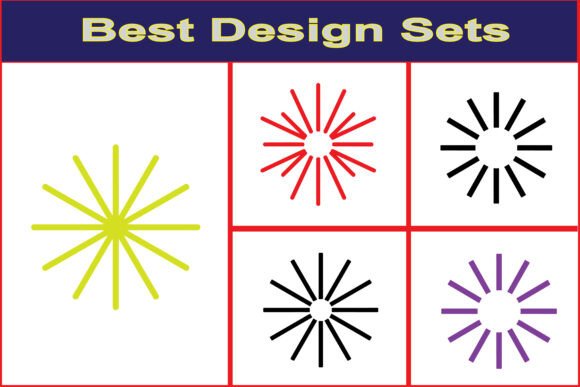
The first thing that strikes you about this design is its architectural precision. The radial layout creates a sense of movement and focus, drawing the eye toward the center. It feels modern, minimal, and intentionally structured. For embroidery designers, this is a double-edged sword. Minimalism leaves nowhere to hide mistakes. If your tension is off, it shows. If your stabilizer is weak, the distortion is obvious.
However, the visual personality here is strong. It does not try to be overly decorative or cluttered. Instead, it offers a bold graphic statement that works exceptionally well for contemporary branding. When I opened the files included in the zip—specifically the EPS and SVG formats—I was pleased to find fully scalable and editable paths. This means I can adjust the size without losing quality, a crucial feature for adapting a single design across different products, from small patches to large tote bags.
Real-World Application: The Tote Bag Test
To truly understand the value of a Graphics asset like this, you have to imagine it on a finished product. I visualized this radial design embroidered on a heavy canvas tote bag. This is a popular item for Etsy sellers and boutique owners because it serves as both a functional accessory and a walking advertisement for a brand.
In this scenario, the geometric lines would likely be stitched using a satin stitch or a dense fill stitch, depending on the scale. The radial symmetry provides a balanced look that sits nicely on the flat surface of a bag. Unlike complex pictorial designs, this geometric approach appeals to a wide demographic. It is gender-neutral and ageless, making it a safe yet stylish choice for a handmade product line. Customers often perceive geometric embroidery as higher-end and more "designed" than standard script fonts, which can justify a higher price point for your small shop product.
Versatility Across Product Lines
Beyond tote bags, this design has significant potential in other areas of commercial embroidery. Consider a monochrome version on a high-quality sweatshirt. The contrast between the textured fleece and the sharp, clean lines of the embroidery creates a tactile appeal that customers love. It also works well for custom apparel aimed at creative entrepreneurs who want subtle branding on their workwear.
For those creating personalized gifts, such as nursery decor or baby items, the softness of the radial shape can be appealing if scaled down appropriately. However, this requires careful attention to detail. A baby embroidery project demands softer threads and potentially a running stitch outline to reduce bulk, ensuring the item remains comfortable against sensitive skin.
Technical Considerations for Embroiderers
While the Geometric Radial Lines Vector Design is visually striking, it requires technical diligence. Here are the practical notes I jotted down during my review:
- Fabric Texture and Stability: Geometric designs highlight fabric inconsistencies. Use a cut-away stabilizer for stretchy fabrics like jersey or fleece to prevent the radial lines from warping after washing. For woven fabrics like cotton or linen, a tear-away might suffice, but test first.
- Stitch Density: Since the file formats provided are EPS, SVG, PNG, and JPG, this is primarily a vector graphic resource. You will need to digitize it or use it as a reference for your embroidery software. Pay close attention to stitch density. Too dense, and you risk perforating the fabric; too sparse, and the background fabric will show through, breaking the illusion of solid lines.
- Hoop Size Constraints: Ensure your design fits within your hoop size without excessive re-hooping, which can lead to misalignment. The scalability of the SVG and EPS files allows you to resize the design to fit standard hoops like 4x4 or 5x7 inches perfectly.
- Thread Color Contrast: This design relies on contrast. Test it in black and white mockups first. High-contrast thread colors against the fabric will make the radial lines pop, while low-contrast choices will create a subtle, tonal effect suitable for understated luxury items.
Navigating Potential Pitfalls
There are scenarios where you should use this design with caution. Curved surfaces, such as caps or hats, can distort radial symmetry if not hooped correctly. The center point of the radial design must align perfectly with the center of the cap to avoid a skewed appearance. Additionally, avoid placing this design on highly textured fabrics like terry cloth unless you use a topping, as the loops of the fabric can obscure the fine details of the lines.
If you are planning to use this for an embroidered patch, consider the edge finishing. The radial lines extending outward may require careful trimming or a merrowed edge to prevent fraying. Always check the smallest details. If the lines are too thin, they may not stitch out cleanly on older machines or with lower-quality threads.
Enhancing Brand Value and Customer Trust
Using high-quality design assets like this directly impacts your brand perception. When a customer receives a finished product with crisp, well-aligned geometric embroidery, it signals professionalism. It suggests that the maker cares about precision and quality. This builds trust, which is essential for repeat business in the competitive world of online crafting.
Furthermore, because this is available as part of Freebies or affordable graphic packs, it allows small businesses to experiment with new styles without a huge upfront investment. You can create printable mockup images using the PNG and JPG files to test market interest before stitching a single thread. This reduces waste and helps you gauge customer reaction to the aesthetic.
Final Verdict for the Practical Designer
The Geometric Radial Lines Vector Design is a versatile tool for the modern maker. It bridges the gap between digital graphic design and tactile embroidery art. Its strength lies in its simplicity and scalability. However, its success depends entirely on your execution. Do not skip the step of testing on scrap fabric. Do not ignore the importance of proper stabilization. And always verify the licensing terms if you plan to sell items made with this design, especially if it was downloaded as a freebie.
For craft business owners looking to expand their catalog with modern, clean aesthetics, this design is a solid addition. It works well for holiday gifts, boutique branding, and everyday carry items. Just remember that in embroidery, the devil is in the details, and geometric designs leave no room for error. Treat this vector file with the respect it deserves, and it will serve your projects well.